
Third School
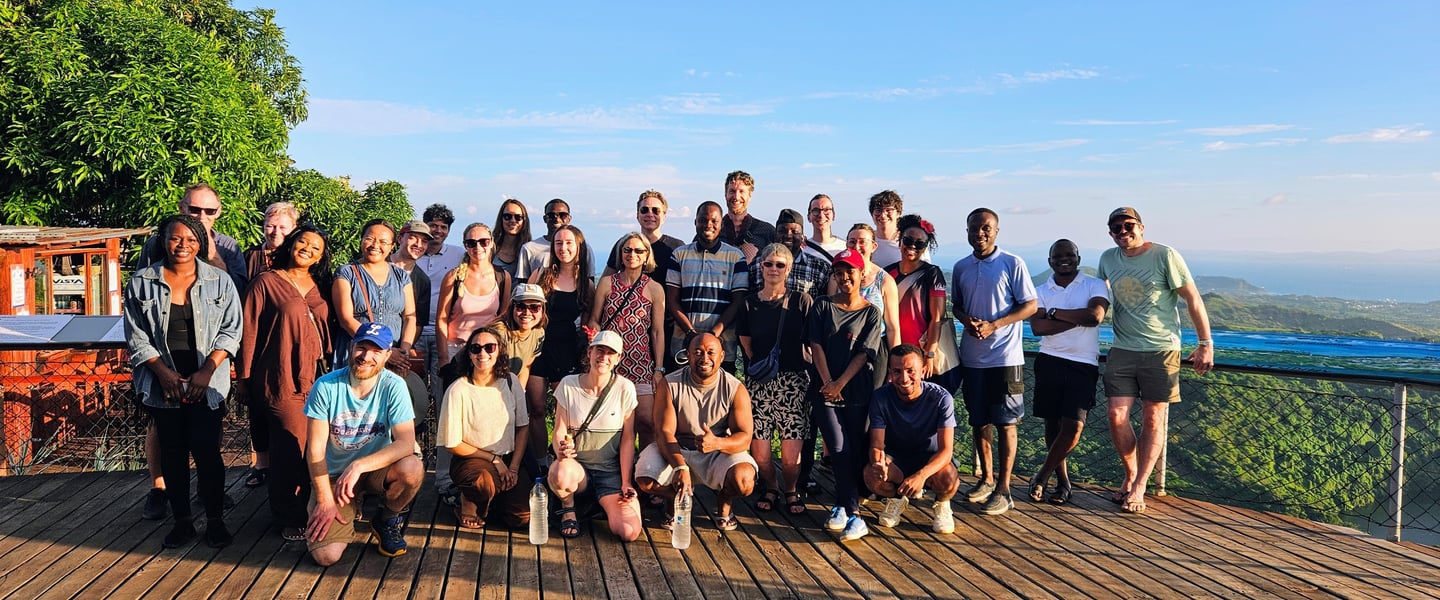
Our third school was held from 13 to 23 April 2026 in Nosy-Be, an island off the northwest coast of Madagascar. The school was co-organised with the ACACIA research project.


2026 Schedule
The CATER–ACACIA School: Climate Risk Adaptation in Action
The 2026 CATER School was the third in a series of immersive, transdisciplinary schools about adapting to climate risk! Held in Nosy Be, Madagascar from 13 to 23 April 2026, the school was embedded within the context of the Anticipatory Climate Adaptation for Communities In Africa (ACACIA) Horizon Europe project.
The school convened learners and teachers for 11 days of intensive work (including two days off during the weekend), combining lectures with group work to develop a ‘serious game.’ Participants will explore climate risk science, disaster preparedness, and community resilience, rooted in the context of floods and tropical cyclones in Madagascar.
School modules:
From weather to impacts
Science in action
Coproduction in climate sciences
Uncertainty and Risk
Measuring impact
Adaptation Pathways
Workshops, case studies, and field-based learning ensured participants gained both theoretical knowledge and practical skills.
Who could apply?
The school was designed for postgraduate students, postdocs, early-career researchers, and practitioners from diverse backgrounds who want to deepen their understanding of, and capabilities with, transdisciplinary approaches for navigating complex climate risks. The programme blended lectures with hands-on learning focused on real-world case studies in Madagascar (the focus of the ACACIA project).
The third cohort had a rough 50/50 balance of participants from Africa and elsewhere, and an equitable gender balance.
Cost
The School fee was €500, covering meals, accommodation, field trips, activities, and airport transfers.
Participants must pay for their own travel to and from Nosy-Be, as well as visa costs and insurance.
Financial support: Applicants from low- and middle-income countries could apply for:
🔹 A stipend to cover travel costs.
🔹 A fee waiver to cover the €500 school fee.
Practical details
The course was conducted in English. The school had a mix of lectures, project assignments, activities, free time and outings. 100% attendance was expected during the school and across the remote engagements before and after the school.
The course venue was the Ravintsara Hotel on the island of Nosy-Be in Madagascar. Accommodation at the course venue was in shared twin rooms.
All students must be in place by the evening of Sunday, 12 April. The school ended on Thursday, 23 April, in time to catch the flight to Addis Ababa leaving at 15:35.
Upon completion of the CATER School the students were awarded a certificate, certificating participation in 65 hours of learning and practical skills building. For those collecting ECTS as part of an academic program, this translates to approximately 5 ECTS upon the submission of the CATER School certificate to your respective institutions. N.B.: Different institutional requirements may cause some variation.
School topics 2026
An introduction to changing climatic risk, with an emphasis on Madagascar
Climate science, climate prediction, and uncertainty
Co-production of climate services
Climate vulnerability and adaptation options through transdisciplinarity
Transdisciplinary theory, processes and practice
Complexity of decision-contexts and the plurality of knowledge in climate adaptation
Different types of evidence and ways of knowing for decision making under uncertainty
Use of game-based participatory methods to share knowledge and evaluate the potential
of climate adaptation services
Principles, ethics and values in climate services, and in transdisciplinary approaches to climate services
Approaches and methods for impact assessment and evaluation of climate services
Job relevance: what skills are required for a successful career in climate adaptation?
Communication skills - write better papers and better proposals as well as develop science-society relationships and facilitate transdisciplinary and/or co-production processes
Lecturers
Erik Kolstad, NORCE/Bjerknes Centre for Climate Research, Norway
Rondrotiana Barimalala, NORCE/Bjerknes Centre for Climate Research, Norway
Jesse Schrage, NORCE/Bjerknes Centre for Climate Research, Norway
Coleen Vogel, University of Witwatersrand, South Africa
Scott Bremer, University of Bergen/NORCE, Norway
Isabelle Ruin, French National Centre for Scientific Research (CNRS), France
Alice McClure, CSAG/University of Cape Town, South Africa
Piotr Wolski, CSAG/University of Cape Town, South Africa
Jon Einar Flåtnes, Chr. Michelsen Institute, Norway
Mathias Venning, NORCE/Bjerknes Centre for Climate Research, Norway
Mesay Tolossa, Ethiopian Meteorological Institute, Ethiopia
ANDRIANALISON Herilaza Thierry, Red Cross Madagascar