Misaotra, I left better than I came
Misaotra means 'thank you' in Malagasy. It is in this vein that Samson Olanrewaju, another CATER 2026 alumnus, describes his experience of the recent School in Madagascar. In this blog he reflects on two main (and important) themes. First, how to take forward the transdisciplinary approach to climate risk fostered at the School. Second, is Nigerian Jollof better than Ghanaian Jollof? Read on to find out...
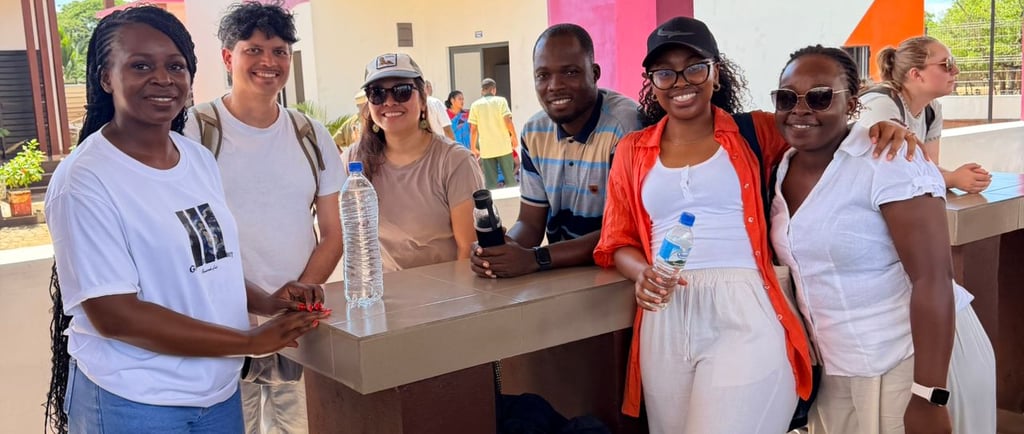
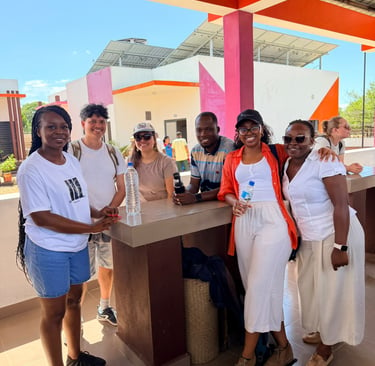
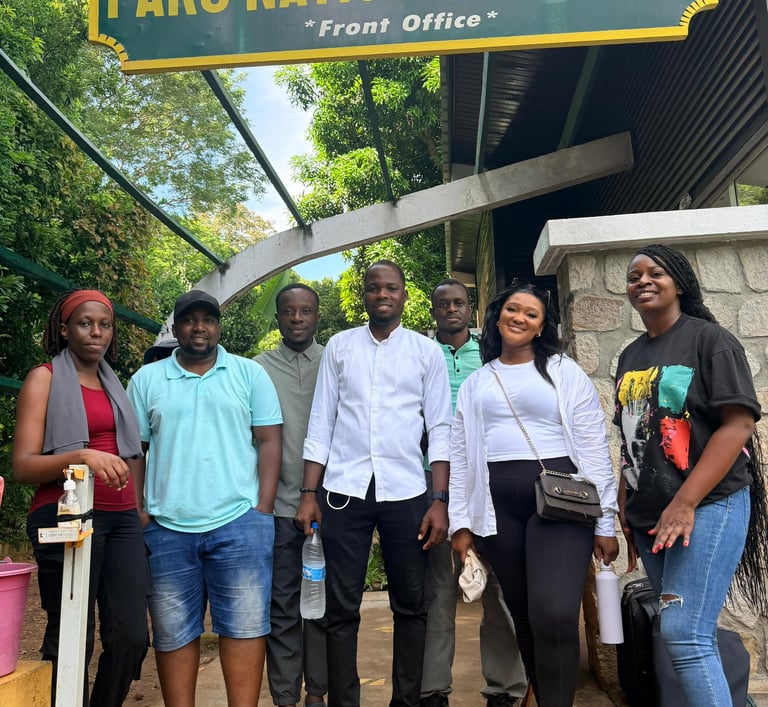
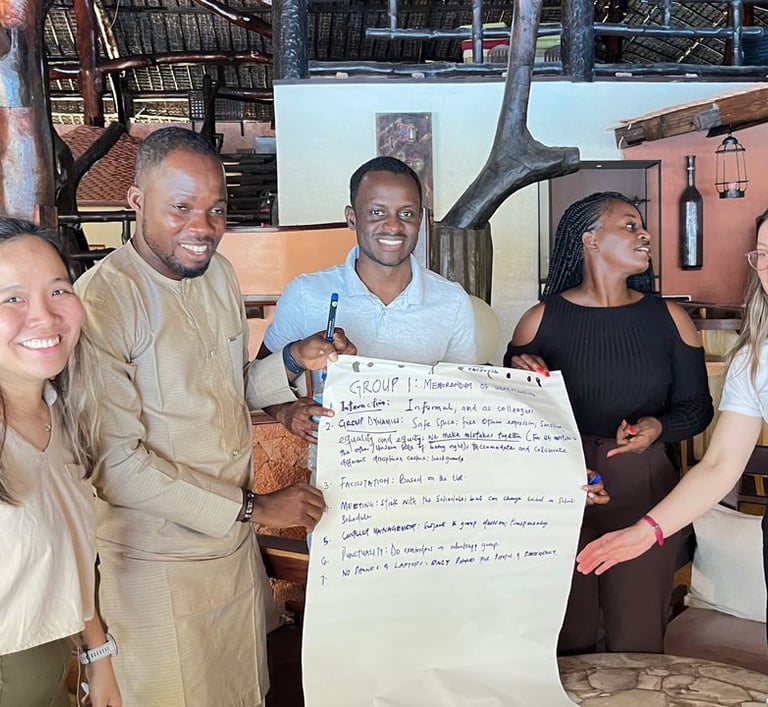
It was the last day of the 2026 CATER school. A day of mixed feelings. Of accomplishing our tasks and returning to base. The warm hugs, the departing smiles, and the silently loud goodbyes. The bonding that nobody seems to want to leave, but we must return to our original destinations. It is a remembrance of the knowledge, experience, and fun shared during the school. The swimming pool games, immersive classes, serious games, and beach times. I remembered my team and our bonding, fueled by passion, and our mantra of “we win and lose together”. With deep smiles, I also remembered the Malagasy dance, ylang-ylang scent, moon-sighting, and the national park tour. Really, I am already missing the CATER School. What started with an application to an acceptance mail, and further to assembling at the Nosy Be airport, is ending with a long trip back home.
As I walked for the last time through the green lush of Ravintsara Hotel, and gazing at the ocean view from the restaurant, I started reflecting. I looked into how the school exemplifies the broader situation of a connected world, both in crisis and in solutions. I look into the diversity of the team, the students, and the school, ranging from the arts, social sciences, to the natural sciences. Also, an intentionally selected group of candidates blending the Global North and South, including those across academia, practice, NGOs, business, and communities. One global challenge, plural perspectives, and transdisciplinary solutions. The school and our experiences reflect how agencies are shaped and negotiated, and how science, locations, culture, and people can be harnessed as community resources towards the climate change crisis. The experiences we saw in Madagascar experience show how African communities are actively shaping their future in the presence of the unfolding climate crisis.
My reflection became deeper as we journeyed in the opposite direction from where we came. I began to ask critical questions arising from the sessions and engagements with the CATER School staff, colleagues, Nosy Be communities, and representatives of the Nosy-Be city administration. How climate governance frameworks can be both inclusive and exclusive at the same time. How anticipatory actions that are not synergised with effective governance can have unwanted spill-over effects. I also reflected on the non-numerical and emotional aspects of impacts, which may not be fully captured by climate impact assessment tools. I also thought on how geography can inform the depth and relevance of included perspectives in climate conversations. Again, the question of 'whose voice matters in climate governance?' keeps resonating. And, I kept thinking that, as anticipatory actions are being advocated for, how are African cities preparing for their next climate crisis?
Beyond these, one thing is unfortunately clear: the CATER school for the year has been concluded. Ideas have been incubated, a new network has been found, and a new set of people has been empowered. Our responsibility is to translate this knowledge into actionable steps, further empowering our respective societies. As I fly back reflecting, I am equally seeing the opportunities of scaling the CATER knowledge to transforming perspectives within my network. As an CATER Alumnus (yes, proudly alumnus!), I also look forward to contributing to the next CATER Schools.
Finally, touching down in Nigeria, I remember a conversation that kept coming up during dinner at the school: is Nigerian Jollof better than Ghanaian Jollof? But I think my Ghanaian roommate knows the answer already, as he is willing to come and enjoy the best meal in Nigeria!
Thanks to CATER School for the investment, and for bringing into the room a network and conversations that will span beyond the school. Once again, Misaotra, I left better than I came.